One long session on the night of 11–12 November ran from Andromeda, down through the Witch Head in Eridanus, and finished in Monoceros with the Cone Nebula. All three used the same 10-second subs; only the integration time and the filter changed.
Where they sit
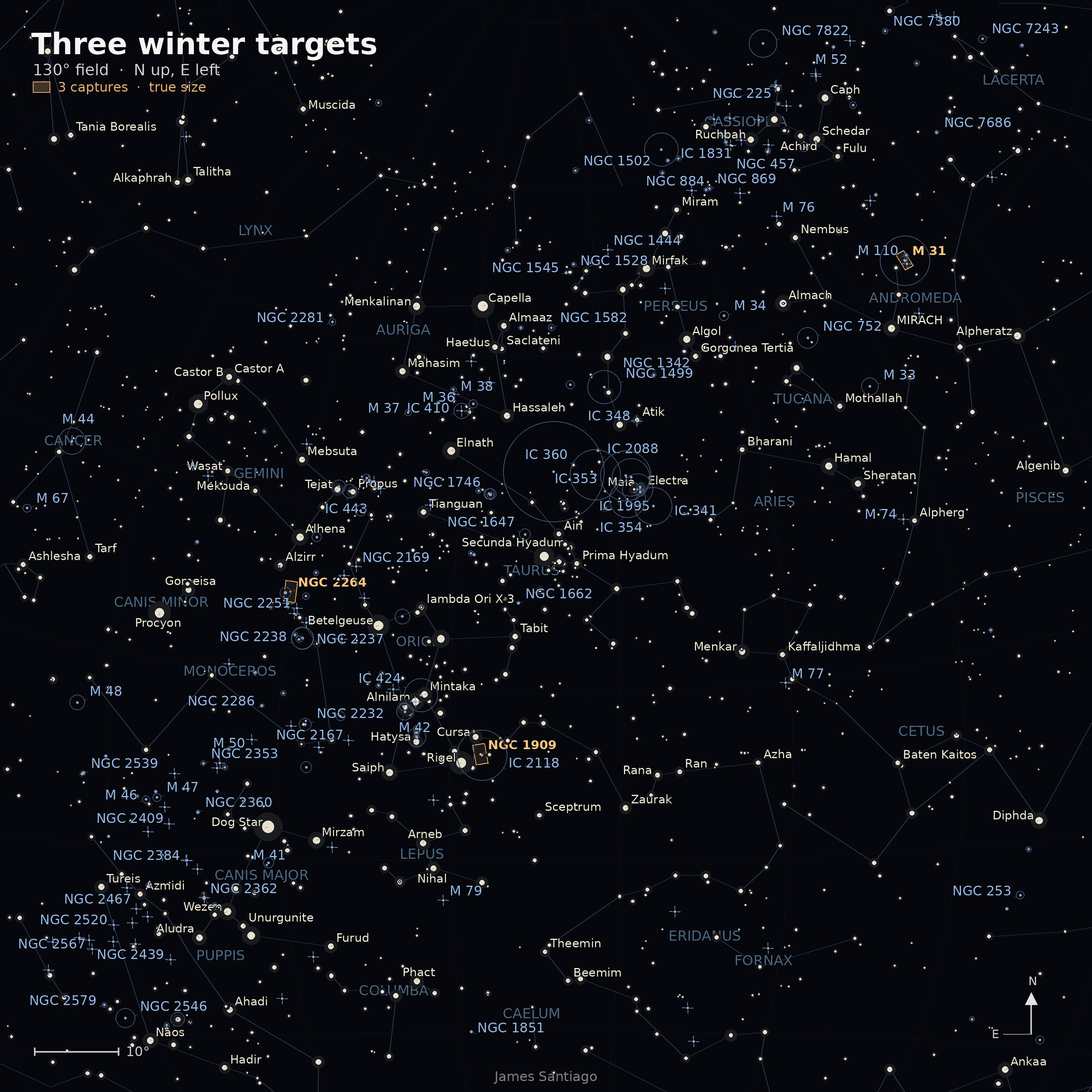
The three fields are spread across a big stretch of the winter sky, from Andromeda in the north-west down to the Orion–Eridanus border and back up into Monoceros. This is a 130° chart with all three footprints drawn at their true size — the Seestar’s field is only about 1.3° × 2.4°, which is why the amber rectangles are so small.
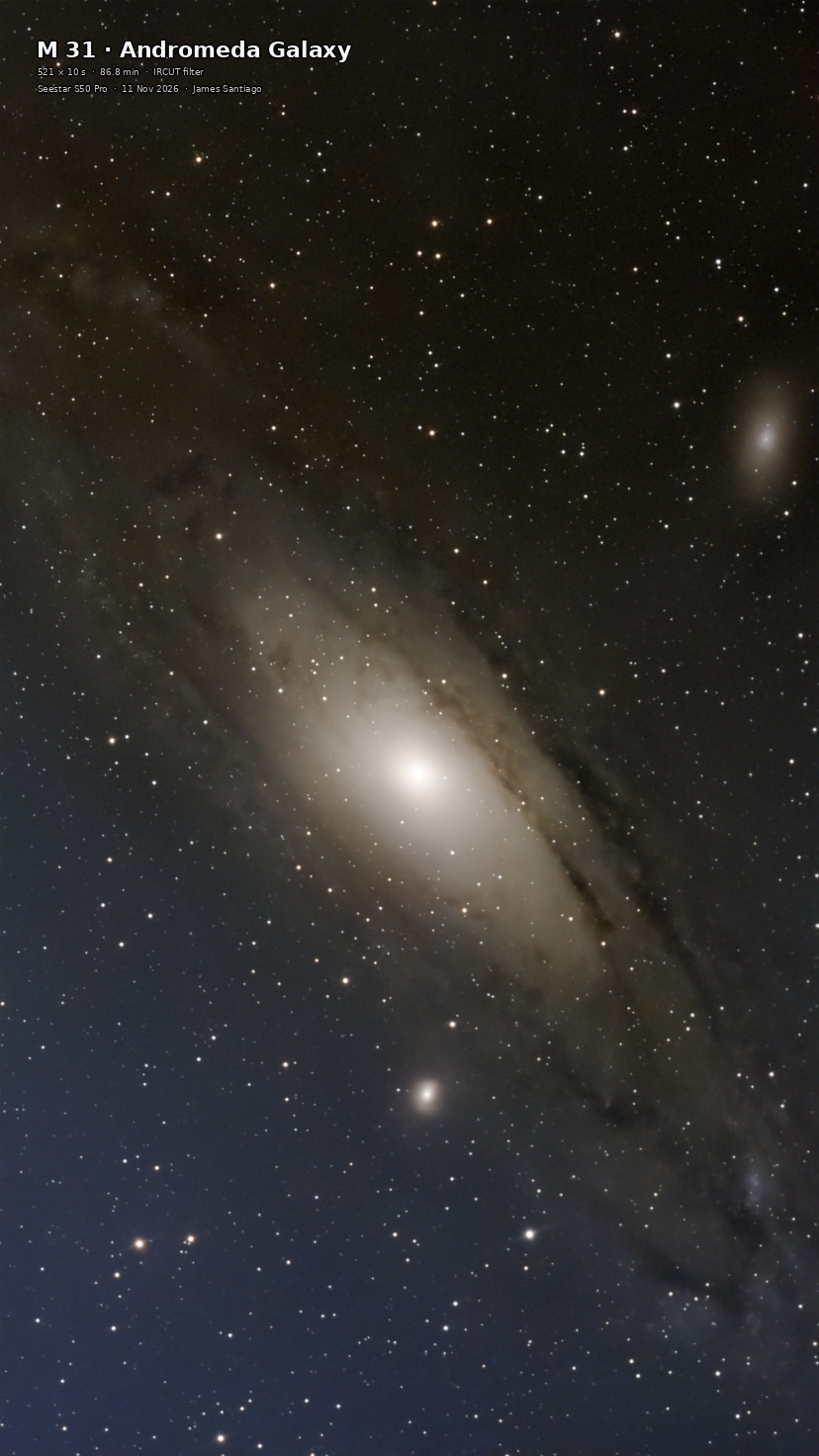
M 31 — Andromeda
The first target was the Andromeda Galaxy, the nearest major galaxy to the Milky Way at about 2.5 million light-years. The galaxy runs from edge to edge, with the dust lanes cutting across the core. M 32 sits just below the core and M 110 is the faint oval above and to the right.
I’ve shot this a few times and always seem to have a bit of an issue with the outer edge of the image and likely additional issues around light pollution. Here there’s also a bit of an odd brightness difference between the lower and upper sections of the image. Messing with the rgb curves helped a bit here to bring out the structure, but I think I need a better dark site for this than my backyard. Possible also processing this myself then with Seestar’s enhancement/stacking.
NGC 1909 / IC 2118 — Eridanus
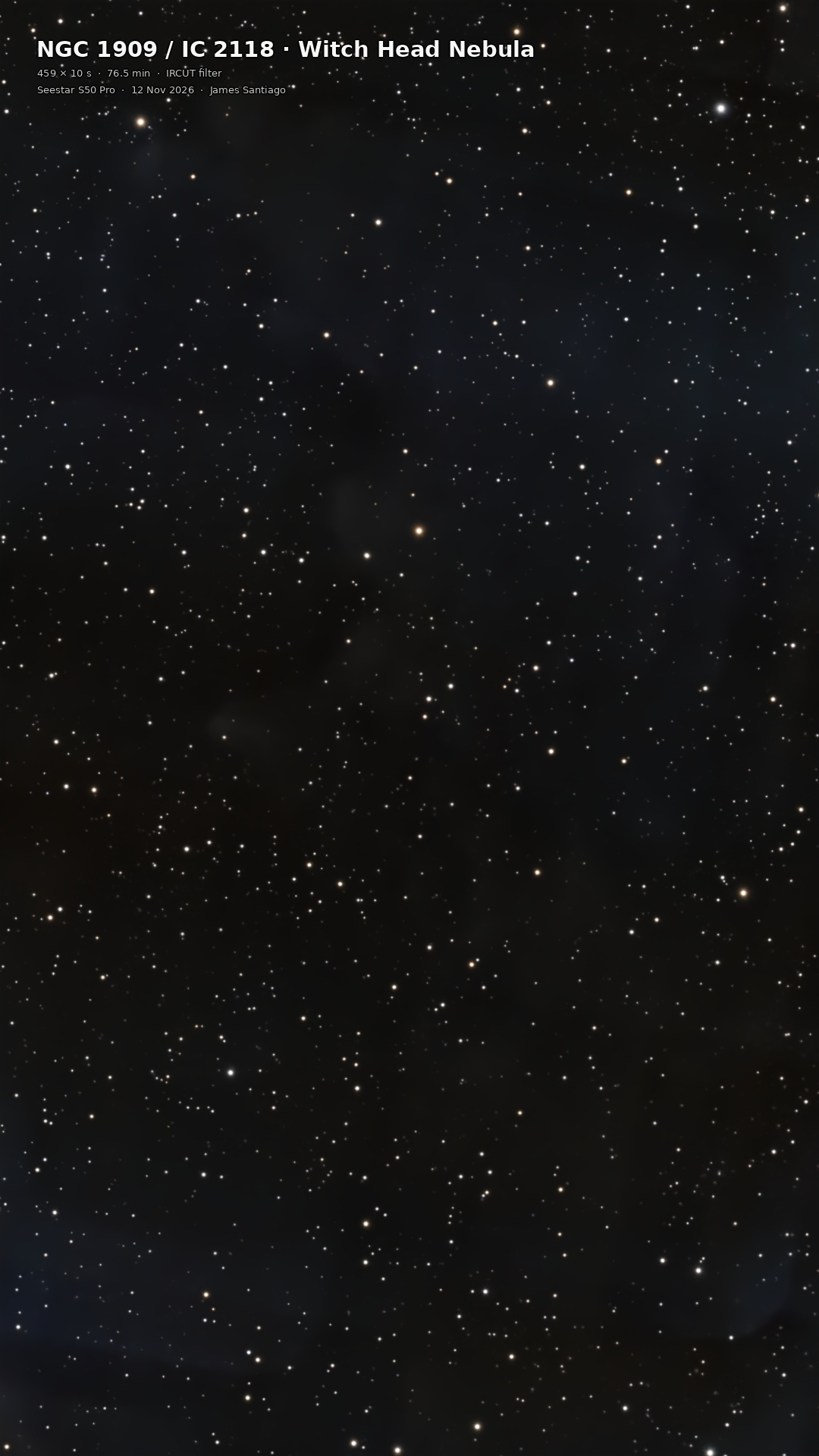
The Seestar files this one under NGC 1909, but the frame is really centred on IC 2118, the Witch Head — a faint blue reflection nebula about 2.5° west of Rigel, lit by the supergiant’s light. It is a hard object for a small scope; most of what the frame catches is the dense star field around it, with the nebulosity showing as a soft haze.
This one was a bit of a complete failure. Stacking looks broken and the nebula itself is unrecognizable.
NGC 2264 — Monoceros
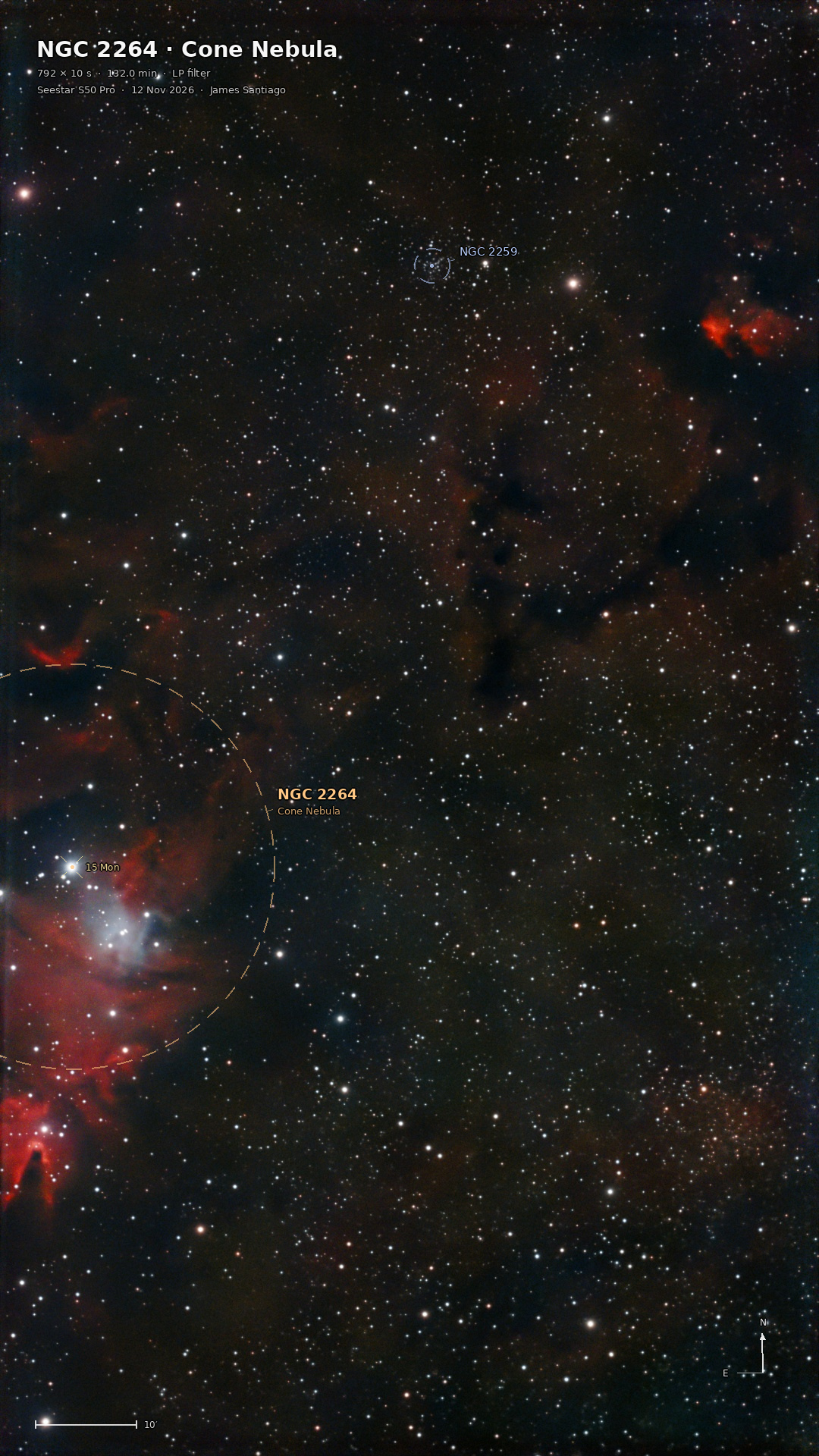
The last target of the night was NGC 2264, the Christmas Tree Cluster and Cone Nebula. With the light-pollution filter fitted, 792 frames went into a 132-minute stack. The cone is the dark pillar at the lower left; 15 Monocerotis, the hot star that lights the cluster, is the bright star beside it.
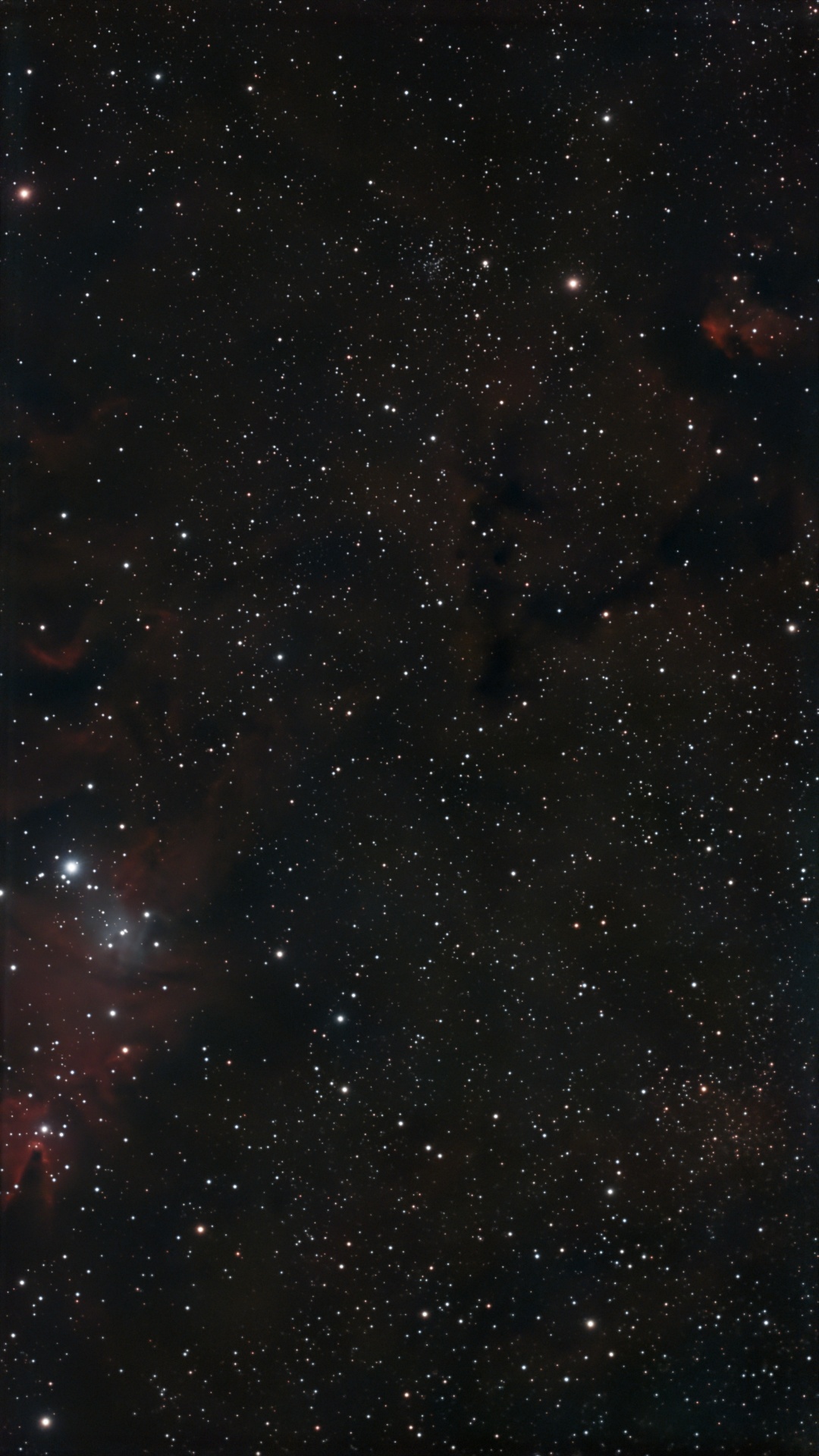
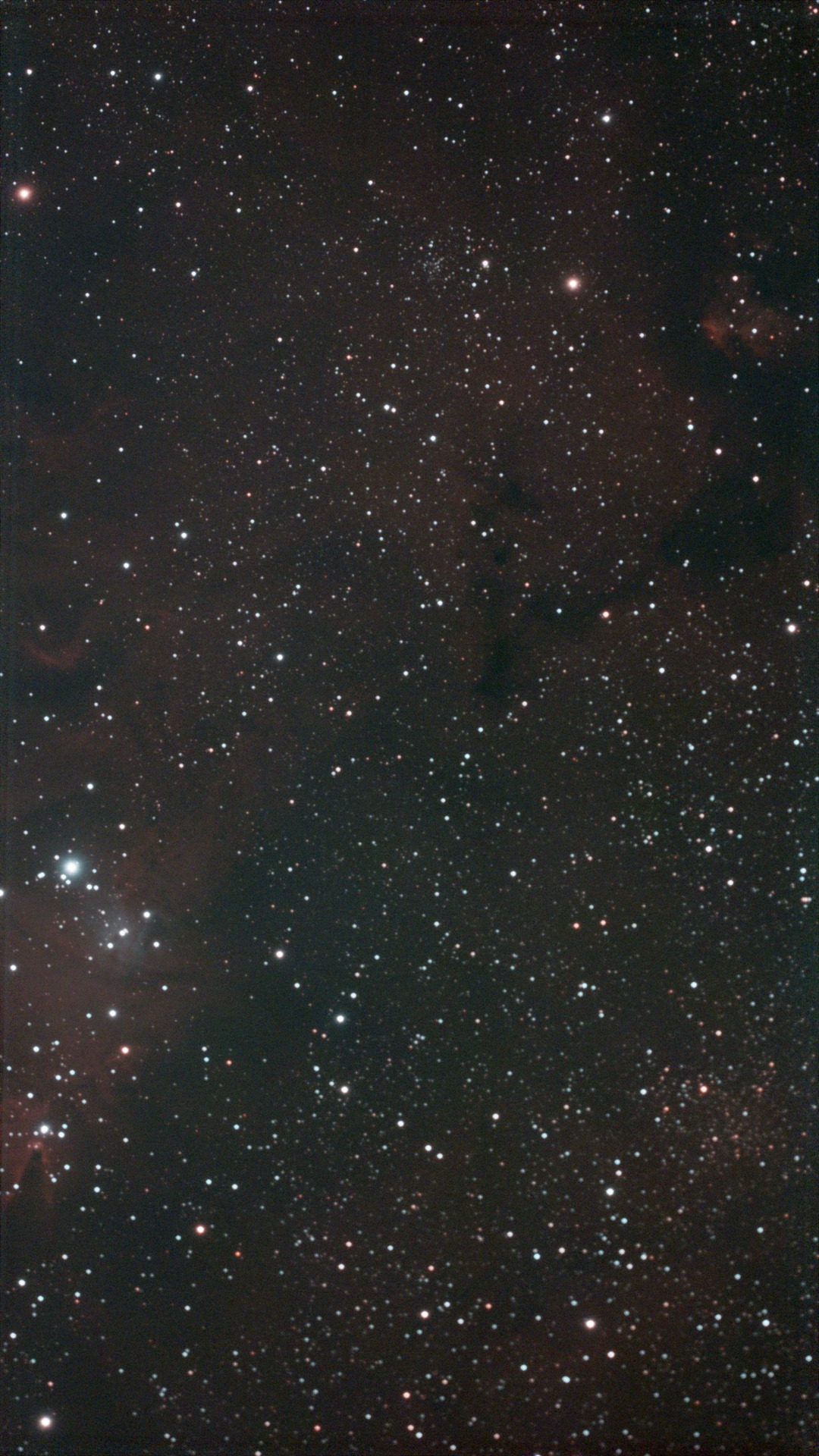
There’s a few images I have here to show the differences in enhancement approaches. The first is a heavily adjusted RGB curve, Seestar’s enhancement, and then a mix of brightness, contrast, and saturation adjustments. The next is everything except for the RGB curve adjustment, and the last is just the stacked image without any of the adjustments. There’s still issues with the stacking that can be seen around the edges of the image and then I likely could have done a better job framing the shot.