Where they sit
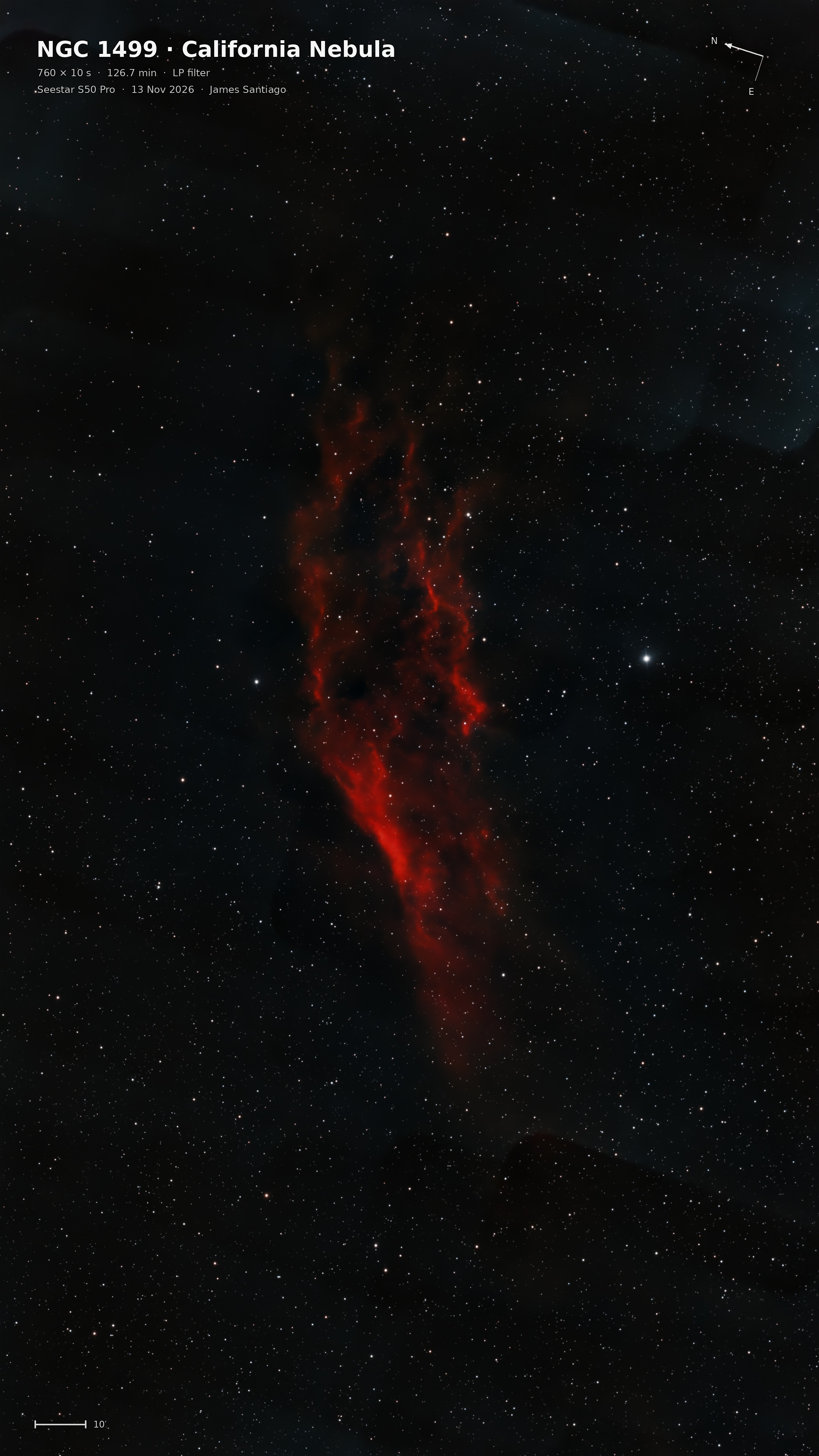
The three fields are close enough to fit on one chart. This is a 58° map with all three footprints drawn at their true size, the Seestar’s field is small enough that the amber rectangles barely register at this scale. Note that NGC 1499, the California Nebula, is larger than the other targets.
19 Aurigae — Auriga (IC 405)
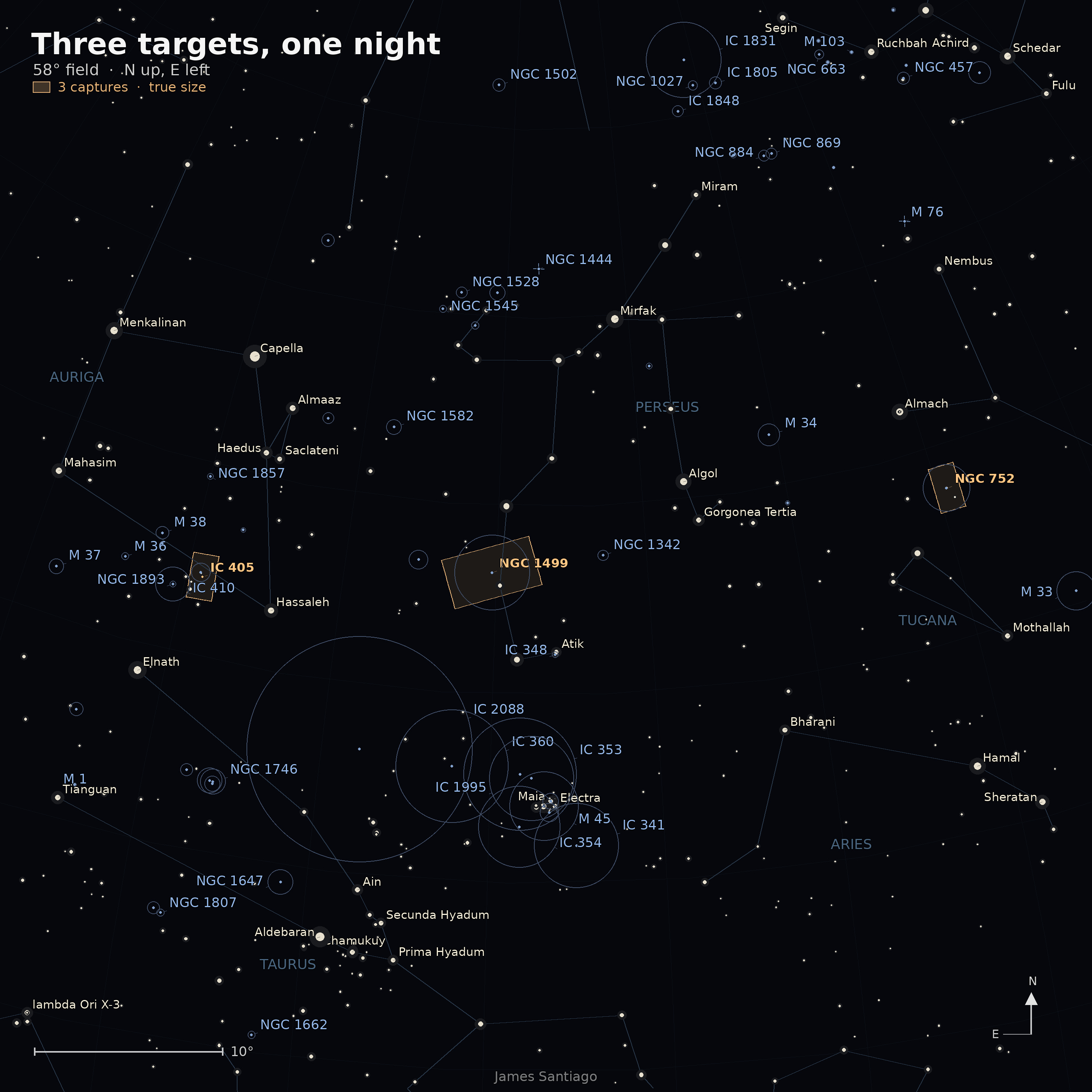
19 Aurigae is a faint naked-eye star in Auriga, but most of this frame is IC 405, the Flaming Star Nebula — an emission nebula lit by the runaway star AE Aurigae. The nebula is about 1,500 light-years away.
I’ve taken this one before, and I’ve got more of the structure defined in the longer capture here, but there is a bit more issues.
C 28 — Andromeda (NGC 752)
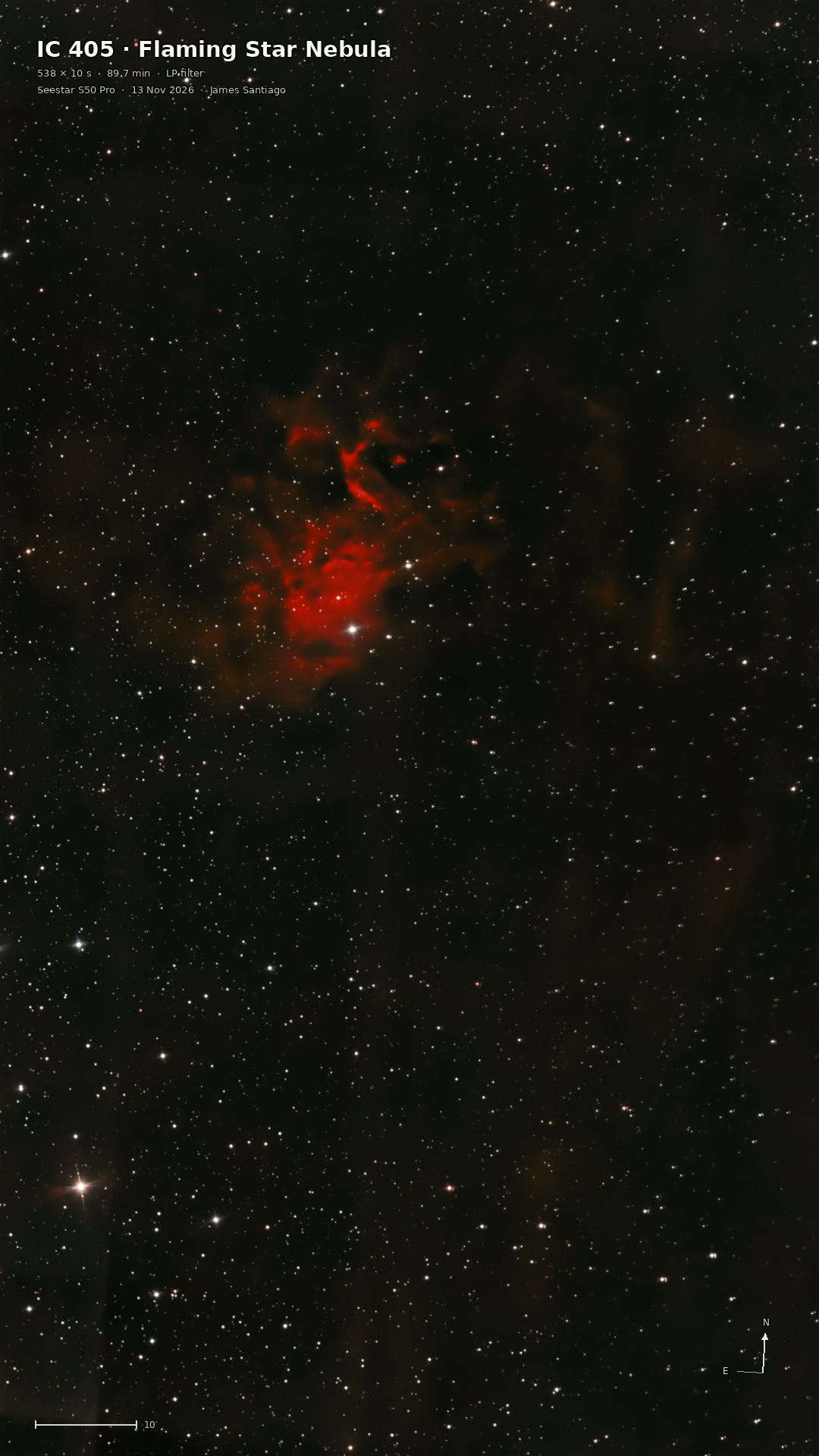
Caldwell 28 is NGC 752, a large, loose open cluster in Andromeda about 1,300 light-years away. At roughly 75′ across it fills most of the Seestar frame, and it is an easy binocular object under a dark sky.
Stars!
NGC 1499 — Perseus (California Nebula)
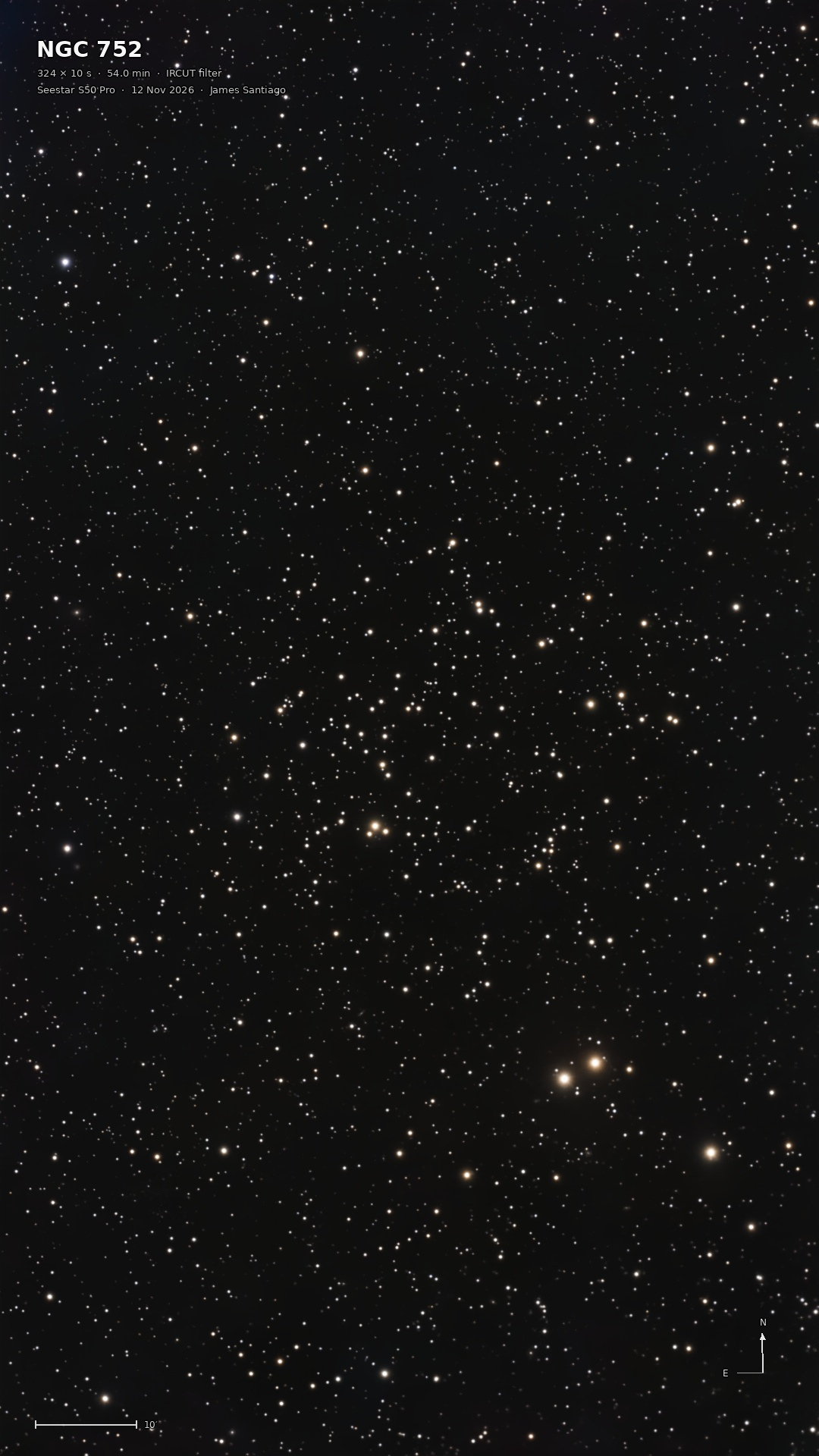
NGC 1499, the California Nebula, is a large emission nebula in Perseus about 1,000 light-years away.
This is 4x the area of Seestar’s frame. When setting the frame it can be expanded and during capture the Seestar will continue to move it’s camera around the expanded frame the create a mosaic + stack of the various captures.